The Coolest Hours Are the Ones You Don’t Pay For
The world is getting hotter, and air conditioning is rapidly shifting from a luxury to a baseline requirement for modern life. With temperatures climbing year after year, the demand for cooling is exploding. What was once considered a convenience is now, in many regions, a critical buffer for health, productivity, and overall well-being.
But this growing demand presents a major challenge. Air conditioning is already one of the largest drivers of electricity use during peak hours. As more buildings rely on cooling, the strain on the grid intensifies, especially in the late afternoon and evening when renewable energy generation declines.
Stasis Energy Group is tackling this problem with a deceptively simple idea: turn commercial air conditioning systems into thermal batteries.
The Peak Demand Problem
Commercial buildings must run energy-intensive air conditioning during peak afternoon hours when electricity is most expensive and the grid is most strained.
For utilities, electricity demand isn’t constant, rather it spikes predictably at certain times of day and seasonally. Building enough baseload generation capacity to handle those peaks would be massively expensive and wasteful since that extra capacity would sit idle most of the time. So utilities rely on peaker plants, which are typically gas turbines that fire up quickly to meet those short bursts of demand, but they’re the most expensive and often dirtiest generation source on the grid.
That gap between generation and demand is where Stasis steps in.
Turning HVAC Systems Into Thermal Storage
Stasis installs a thermal storage chassis directly into the supply ductwork of commercial HVAC systems. During normal operation in the morning and early afternoon, the building’s air conditioner runs as usual. As cold air flows through the duct, it freezes metal plates and phase change material inside the Stasis unit.
The stored cooling remains dormant until peak demand hours.
At around 4 p.m., when electricity prices and grid strain surge, the system takes the compressor offline. Instead of consuming energy to generate new cooling, the HVAC fan pushes air through the frozen thermal storage panels, delivering cool air throughout the building.
The result is what Morton calls “literally free cooling” during the most expensive hours of the day.
Reducing Emissions and Costs
The impact is significant. By shifting cooling loads away from peak demand periods, Stasis reduces reliance on fossil fuel peaker plants and cuts greenhouse gas emissions by up to 80 percent compared to standard systems.
Building owners benefit as well. Lower peak demand translates to reduced utility bills and improved energy resilience. Because the system integrates into existing HVAC infrastructure, installation is straightforward and does not disrupt building operations.
This approach also strengthens the grid. By lowering peak demand, Stasis helps reduce the risk of blackouts and enables greater use of renewable energy.
As John Mumford, Sales Engineer, noted, the technology “lets us take more advantage of renewables and meet the needs in the afternoon when our grid is most challenged.”
A Scalable Solution for a Warming World
Cooling demand will continue to grow as global temperatures rise and access to air conditioning expands. Solutions that reduce the energy intensity of cooling without sacrificing comfort are essential to a sustainable future.
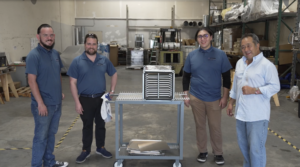
Stasis Energy Group’s set-it-and-forget-it technology offers exactly that. It delivers the same level of cooling while lowering costs, cutting emissions, and easing grid strain.
The Role of CalSEED
Early support from CalSEED played a pivotal role in bringing Stasis’s technology to life. Through the Concept Award and subsequent Prototype Award, the program provided funding, mentorship, and a network that helped the company move from idea to deployment.
“The CalSEED program was seriously amazing,” Morton said. “We would not be where we are today without the support they gave us.”
By supporting early-stage innovators like Stasis Energy Group, CalSEED is helping California build a cleaner, more resilient energy system—one building at a time.
Related Posts
-
CalSEED: Who We Are
28 Jan 2026