Reinforcing the Backbone of Electrification
The Growing Strain on Our Grid
Across the United States and around the world, aging infrastructure and increasingly severe weather are pushing our transmission systems to their limits. In fact, the majority of power outages today are tied directly to extreme weather events. At the same time, electrification is accelerating. More demand. More strain. More risk.
The reality is simple: the grid we depend on wasn’t built for what’s coming next.
That’s where GridWrap is stepping in.
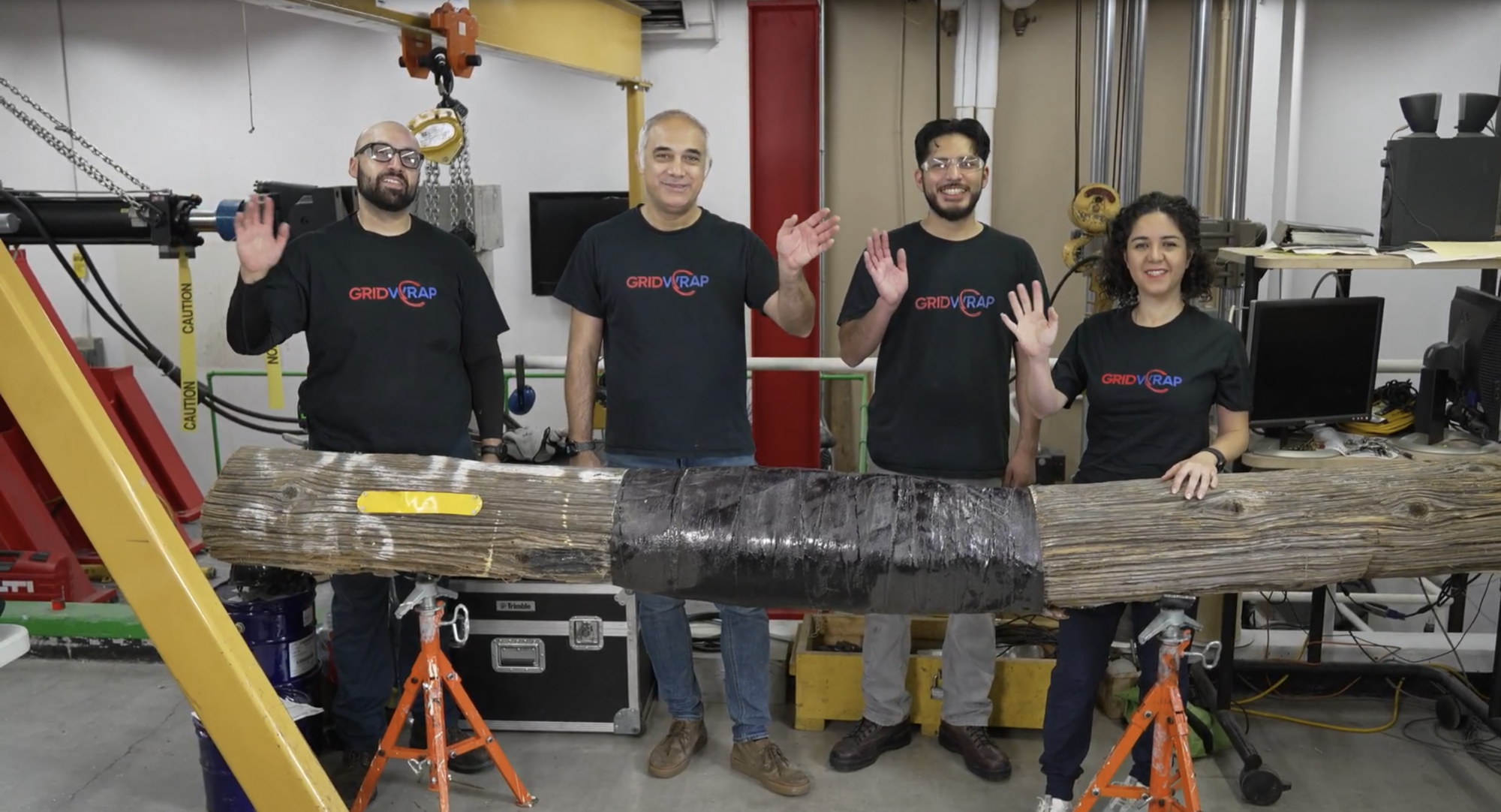
Rather than replacing the grid piece by piece, a process that is slow, expensive, and disruptive, GridWrap is rethinking the problem entirely. While conventional solutions like undergrounding can be effective in some areas, they don’t make sense everywhere. GridWrap’s approach focuses on reinforcing what already exists, transforming aging infrastructure into stronger, more resilient assets without the impracticality or cost of a one-size-fits-all burial strategy.
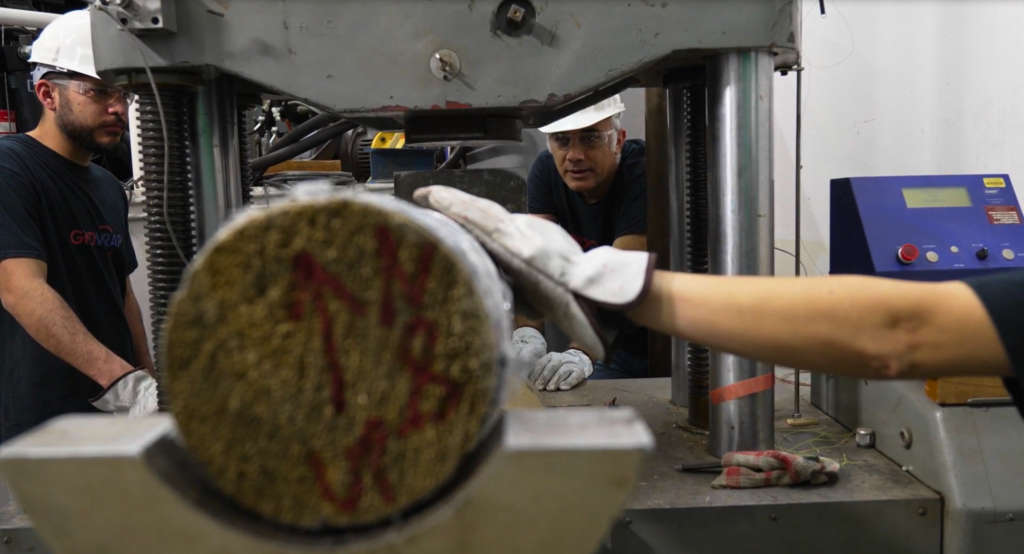
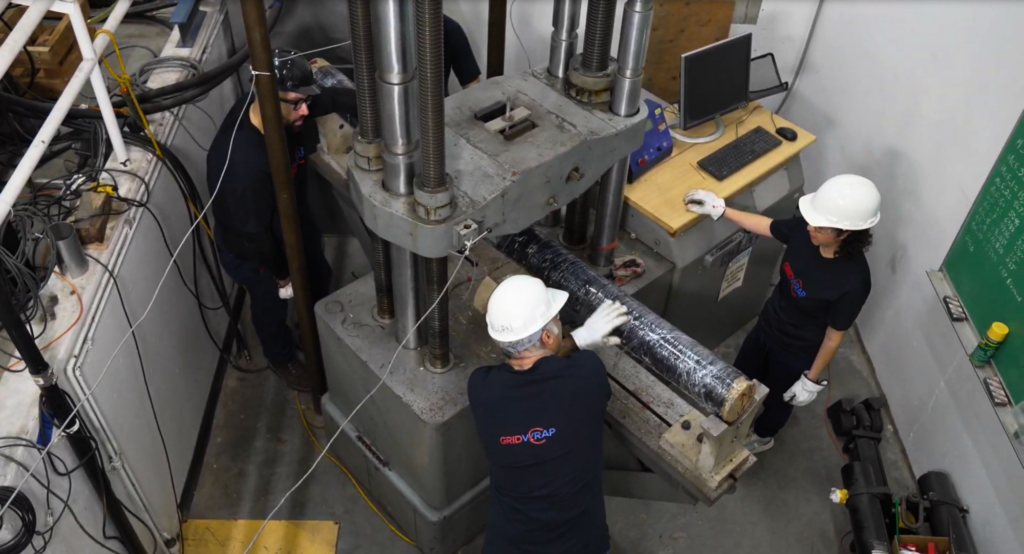
At the core of their innovation is advanced composite material technology. GridWrap applies a specialized composite wrap directly to existing infrastructure. The result is a dramatic increase in mechanical strength and load capacity, effectively restoring poles to their original condition, and in many cases, making them even stronger than before.
It’s a fundamentally different approach. And it matters.
Today, utilities face enormous financial and operational challenges. Replacing a single utility pole can cost tens of thousands of dollars. Multiply that across millions of aging poles nationwide, and the scale of the problem becomes clear. Even then, replacement alone cannot keep pace with the growing impacts of extreme weather.
Their Advantage: Faster, Stronger, Built for What’s Next
Their solution can be deployed quickly, without interrupting electricity delivery to customers. It eliminates the need for heavy equipment like cranes, reducing both safety risks for crews and logistical complexity in the field. In advance of storms, where preparedness is critical, this kind of rapid deployment can increase grid resilience and prevent power outages before they start, avoiding prolonged disruptions instead of just responding to them.
But the impact goes beyond cost and speed.
By strengthening existing infrastructure instead of replacing it, GridWrap helps utilities extend the life of their assets while reducing the financial burden on ratepayers. Resources that would have been spent on replacement can instead be redirected toward grid expansion, modernization, or other critical investments.
And as renewable energy continues to scale, that flexibility becomes even more important.
Enabling the Future of Energy
A more resilient grid isn’t just about preventing outages, it’s about enabling the future of energy. Renewable generation depends on a robust transmission network capable of handling increased loads and variability. Without that foundation, progress stalls.
GridWrap’s technology directly addresses one of the most urgent challenges in the energy transition: how to modernize infrastructure fast enough to keep up with demand. By making the grid stronger, safer, and more adaptable, they are strengthening the infrastructure for a more reliable and sustainable energy system.
The Clock Is Ticking. Here’s How We Win.
Programs like CalSEED and CalTestBed have played a critical role in making this possible. Through early-stage funding and technical support, GridWrap has been able to test, validate, and de-risk their technology. This is an essential step in working with utilities, where reliability and performance are non-negotiable.
Looking ahead, the need for solutions like this will only grow. Infrastructure is aging. Extreme weather isn’t slowing down. And electrification is accelerating faster than ever.
The question is no longer whether the grid needs to evolve.
It’s how quickly we can make it happen.
GridWrap is proving that the solution doesn’t have to start from scratch.
Related Posts
-
The Coolest Hours Are the Ones You Don’t Pay For
18 Mar 2026
-
CalSEED: Who We Are
28 Jan 2026